
Painting

William
Suppervisor - MJ Pro Painters
Realistic repainting timelines for interiors and exteriors, the signs a repaint is overdue, and how to make a paint job last longer.
There is no single "right" answer to when a home needs repainting - a paint job lasts as long as its surface, its preparation, its product, and the weather it lives in. In Sydney, that means sun, salt air and humidity set the clock. This guide gives you realistic intervals for every part of a home, the signs that mean a repaint is overdue, and the things that make a paint job last longer.
Treat these as realistic planning ranges, not rules. A well-prepped, professionally applied paint system sits at the top of each range; a rushed job or a badly weathered surface sits at the bottom.
Typical repaint intervals for Sydney homes
| Area | Typical interval | What drives it |
|---|---|---|
| Bedrooms, living, study, guest rooms | 7–10 years | General wear and cleaning |
| Hallways, stairs, entryways | 3–5 years | High traffic, hand marks, scuffing |
| Bathrooms | 3–5 years | Moisture, steam, ventilation |
| Kitchens & laundries | 3–5 years | Steam, grease, splashes |
| Exterior - render & masonry | 10–12 years | Preparation, UV, rain |
| Exterior - timber & fibre-cement | 7–12 years | Substrate, sun exposure |
| Decks, fences & stained timber | 2–4 years | Foot traffic, UV, oil vs stain |
| Coastal homes (salt & full sun) | 3–5 years | Salt spray, UV, humidity |
Interiors live longer than exteriors because they are sheltered from UV and rain - but three things shorten their life fast: moisture, traffic and direct sunlight. Look at your rooms through that lens and the numbers make sense.
Low traffic and no moisture means these hold up well. Drop to 3–5 years if young children treat the walls as a canvas, or if the room takes direct afternoon sun.
Steam and humidity are relentless. Good extraction and a quality moisture-resistant, low-sheen system can stretch this toward 5–7 years; poor ventilation pulls it shorter and invites mould.
Cooking steam, airborne grease and detergent splashes build up a film that dulls and stains. Washable, harder-wearing sheens do better here than flat matt.
The busiest surfaces in the house - hands, bags, furniture and shoes. Scuff-resistant finishes and a mid or low sheen (which cleans up) are the smart choice.
Why sheen matters indoors: Matt looks premium on low-traffic walls, but it is harder to clean. In wet areas and busy corridors, stepping up to a low-sheen or semi-gloss gives you a surface that survives scrubbing. In a bathroom, that one decision can be the difference between a 3-year and a 5-year cycle.
Outdoors, the substrate you are painting matters as much as the paint. Each material holds a coating differently, so the honest answer is a range - not one figure.
| Exterior surface | Expected lifespan |
|---|---|
| Painted brick & masonry | 12–15 years |
| Render (professional prep) | 10–12 years |
| Fibre-cement & weatherboard systems | 10–12 years |
| Timber weatherboards | 7–10 years |
| Coastal homes (salt & full sun) | 3–5 years |
| Stained / clear-finished timber (decks, fences) | 2–4 years |
Two things to note. First, render is not automatically the longest-lasting surface - it is the most exposed and the most dependent on correct preparation and priming. Second, stained and clear-finished timber is a completely different cycle: it is not "paint" at all, and oiling or re-staining every few years is what stops the timber from greying and splitting.
Your roof is a project of its own. It takes the full force of the Sydney sun and can fade, chalk and crack long before the walls beneath it. Our roof painting Sydney service covers roof restoration and protective coatings built for exactly this climate.
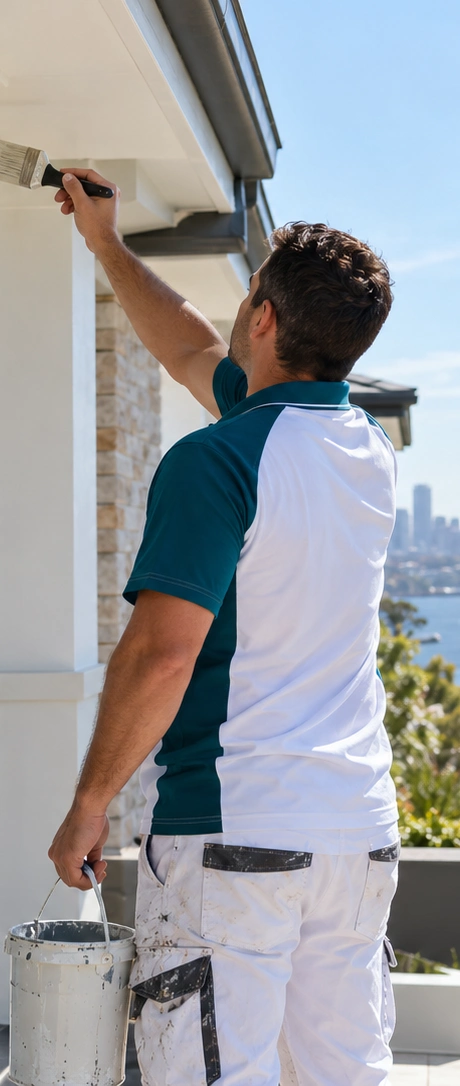
Sydney's climate is genuinely tough on coatings. If any of these apply to your property, plan for the lower end of every range above.
A calendar tells you when a repaint is due. These signs tell you when it is overdue. If you spot two or more, book an inspection rather than a paint quote - there may be repair work to do first.
Most of the lifespan of a paint job is decided before the first coat goes on. These are the levers that genuinely move the needle.
The cheap-quote trap: A very low quote usually means rushed or skipped preparation - no washing, no sanding, no primer. The finish may look fine for a season, then peel, crack or blister years ahead of schedule. In a Sydney home, that is the most expensive way to save money.
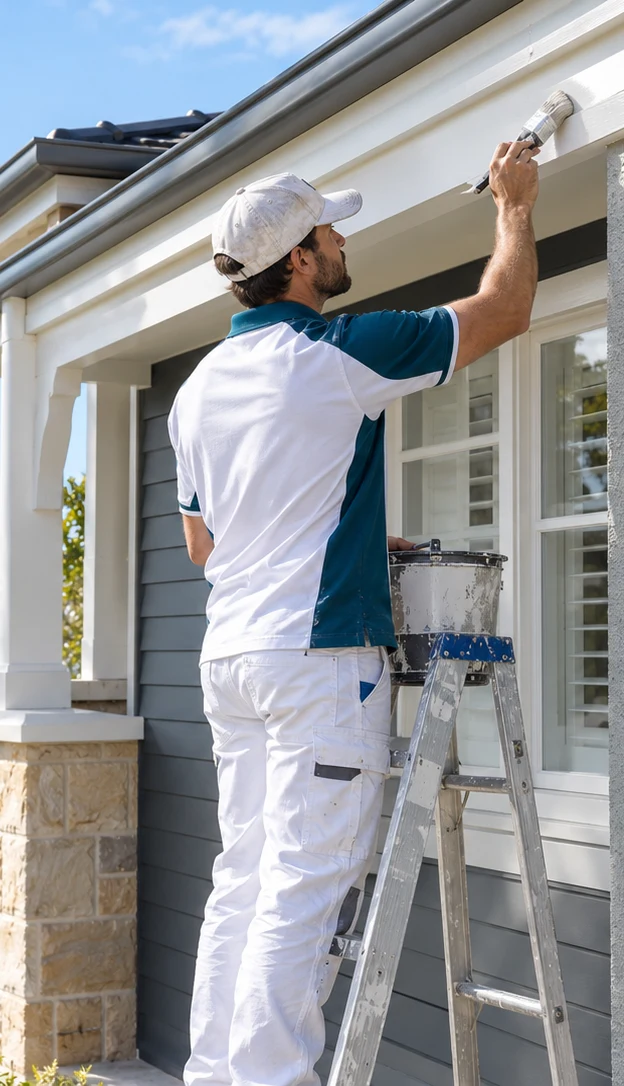
You can absolutely repaint a single room yourself. Where DIY starts to cost more than it saves is the exterior: multi-storey access and safety, extensive preparation, correct primers for tricky substrates, and getting a coating to perform in coastal conditions. That is where professional preparation and product selection decide whether a job lasts four years or twelve.
A professional paint job should give you a clear scope of work, the right products, a fully licensed and insured team, and a finish that protects the property - not just one that photographs well on the day.
The same logic applies to commercial properties. Warehouses, factories, workshops and facilities need heavy-duty systems rather than residential coatings. We provide industrial coatings Sydney for floors, steel and structures, and epoxy flooring Sydney for durable, seamless, easy-clean commercial floors.

© 2025 MJ Pro Painters - All Rights Reserved
Socials


